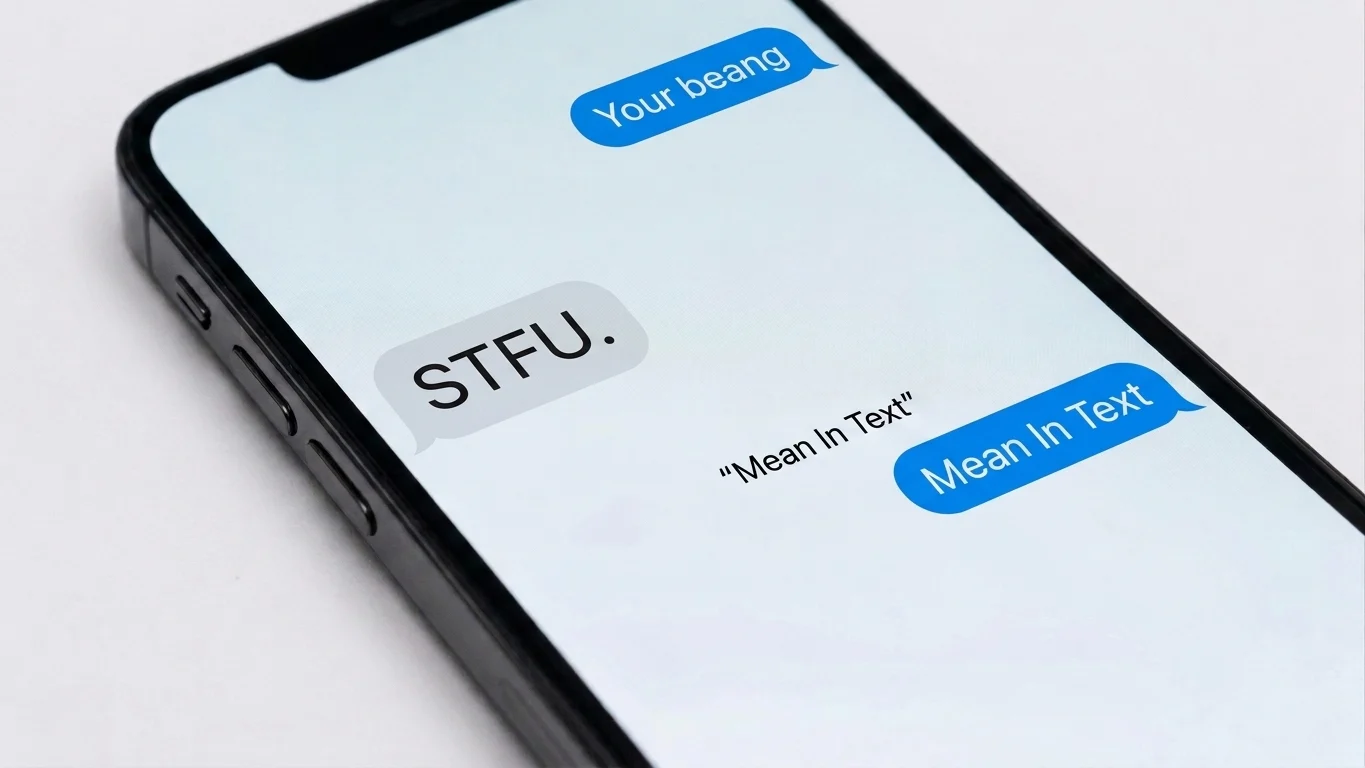
Have you ever received STFU in a text and wondered whether the person was joking, annoyed, or actually being rude? STFU meaning in text is commonly understood as “Shut the F* Up,”** a blunt slang expression used to tell someone to stop talking or sometimes to show strong disbelief or surprise.
Although it appears frequently in texting, social media, gaming chats, and online conversations, its tone can change depending on the context and relationship between people.
Understanding the STFU full form, slang meaning, and texting usage can help you avoid misreading a message or using the phrase in the wrong situation. Let’s explore its meaning, tone, examples, and appropriate usage.
Quick Answer
STFU meaning in text is “Shut the F* Up.”** It is a strong and informal slang expression used to tell someone to stop talking. Depending on the situation, it can also express annoyance, disbelief, shock, frustration, or playful surprise.
The phrase is common in text messages, social media, online chats, gaming conversations, and casual communication. However, its meaning is not always the same emotionally. A close friend might use STFU jokingly after hearing surprising news, while the same phrase from an angry person can sound aggressive or insulting.
| Term | Meaning |
| STFU | Shut the F*** Up |
| Type | Internet slang / texting abbreviation |
| Tone | Usually rude, blunt, or aggressive |
| Common use | Texting, chats, social media, gaming |
| Can be playful? | Yes, depending on context |
If you are unsure what someone meant by STFU in a text, look at the surrounding message, punctuation, emojis, and your relationship with that person before assuming their intention.
STFU Meaning in Text
The STFU meaning in text is generally “Shut the F*** Up.” It is an abbreviation that replaces the full phrase with four letters, making it quick and easy to type in informal conversations. Because it contains profanity, STFU is considered stronger than simply saying “be quiet” or “stop talking.”
In everyday texting, STFU can have several meanings depending on context. The most direct use is telling someone to stop speaking. For example, if two people are arguing, one person might send “STFU” to show anger or frustration. In that situation, the abbreviation is clearly confrontational.
However, STFU can sometimes have a completely different emotional meaning. Friends may use it as an exaggerated reaction to something unbelievable or exciting. For example:
“I just won $500!”
“STFU! Seriously?!”
Here, the sender may not literally be demanding silence. Instead, STFU slang can communicate surprise or disbelief, similar to “No way!” The relationship between the people involved is important when interpreting this kind of message.
This is why understanding texting slang requires more than simply knowing the dictionary definition. The same abbreviation can sound humorous between close friends but offensive when used with a stranger, coworker, teacher, customer, or someone you do not know well.
What Does STFU Stand For
STFU stands for “Shut the F* Up.”** The abbreviation is formed from the first letters of the words in the phrase, with the profanity commonly written in abbreviated or censored form.
STFU belongs to a broader category of internet slang, chat abbreviations, texting acronyms, and online expressions. Like other short forms used online, it became popular because people can communicate strong reactions quickly without typing a complete sentence.
The important point is that knowing the STFU full form does not automatically tell you how the sender intended it. Context determines whether the expression is serious, humorous, sarcastic, or hostile.
For example:
Angry use:
“STFU and leave me alone.”
This clearly communicates irritation and a demand for someone to stop talking.

Playful use:
“STFU 😂 You actually met your favorite actor?”
This may express excitement or disbelief rather than genuine anger.
Surprised use:
“STFU! You got the job?”
Here, the phrase can function more like “You’re kidding!” or “Really?”
Understanding these differences is especially useful when reading social media slang because online messages often lack the facial expressions and voice tone that help us understand spoken communication.
How Is STFU Used in Texting?
STFU is used in texting primarily as a blunt way to tell someone to stop talking. It can appear as a standalone message or as part of a longer sentence. Its interpretation depends heavily on the conversation and the relationship between the people communicating.
One common use is during an argument:
“You never listen to me.”
“Just STFU for a minute.”
In this example, STFU is clearly aggressive and confrontational. It may escalate the disagreement rather than solve it.
Another use is among friends who regularly use casual slang with one another:
“I finally bought the car I wanted.”
“STFU 😭 That’s amazing!”
The laughing or crying emoji can signal that the sender is reacting dramatically rather than genuinely telling the other person to be silent.
STFU can also be used as a reaction to unexpected information:
“Guess who I saw at the concert?”
“Who?”
“Taylor Swift.”
“STFU!”
In this context, the expression may communicate disbelief or excitement.
When deciding whether STFU is appropriate, consider three things: who you are talking to, what you are discussing, and the tone of the conversation. A phrase that feels harmless in a private conversation with a close friend can appear disrespectful in a professional or unfamiliar setting.
For formal communication, safer alternatives include “Please stop,” “Could you give me a moment?” “I need some quiet,” or “Let’s pause this conversation.” These expressions communicate the same general idea without the profanity or confrontational tone.
Is STFU Rude or Offensive?
Yes, STFU can be rude or offensive, especially when it is directed at someone seriously. Because the phrase contains profanity and directly tells another person to stop talking, it can easily come across as disrespectful, hostile, or insulting.
That said, STFU is not automatically intended as an insult every time it appears. In informal conversations between close friends, people sometimes use it jokingly to express surprise, excitement, disbelief, or playful teasing. Context is therefore essential.
A useful way to judge the tone is to consider the surrounding language:
| Context | Likely tone |
| Argument or disagreement | Aggressive |
| Message to a stranger | Rude |
| Workplace conversation | Inappropriate |
| Close friends joking | Possibly playful |
| Reaction to shocking news | Surprised or excited |
| Social media comment | Depends on context |
If you receive an STFU message and cannot determine the person’s intention, avoid immediately assuming they are angry. Look at the previous messages, emojis, punctuation, and the usual communication style between you.
For your own messages, it is safest to avoid STFU slang in professional, academic, customer service, or unfamiliar conversations. Even when you intend it as a joke, the other person may interpret it literally.
Ultimately, STFU is a highly informal expression with a strong tone. Knowing both its literal meaning and its conversational use helps you understand what someone is actually trying to communicate rather than relying on the four letters alone.
How STFU Is Used in Text Messages
STFU meaning in text can change depending on the situation, relationship, and tone of the conversation. Although the abbreviation literally means “Shut the F* Up,”** people do not always use it as a serious command. In casual texting, social media, gaming chats, and private messages, it can express anything from playful surprise to genuine irritation.
The most important factor is context. A close friend saying “STFU 😂” after hearing exciting news may be joking, while the same message during an argument can sound aggressive or disrespectful. Understanding the situation helps you recognize the intended tone and slang meaning instead of assuming every use is hostile.
1. Expressing Surprise
One common use of STFU in texting is to express strong surprise, disbelief, or excitement. In this context, the person is not necessarily telling someone to be quiet. Instead, STFU can mean something closer to “No way!” or “You’re kidding!”
For example, if a friend says, “I just met my favorite actor,” another friend might reply, “STFU! Seriously?” Here, the abbreviation shows shock and excitement rather than anger. Emojis, punctuation, and the surrounding conversation often make this playful meaning easier to recognize.
This usage is especially common between people who already have a comfortable relationship. If someone sends “STFU 😂”, “STFU no way”, or “STFU, that’s shocking”, the message may be expressing disbelief rather than aggression.
Still, readers should pay attention to the relationship and context. Using STFU meaning in text this way with a stranger or in a professional conversation could easily create confusion because the phrase contains profanity and has an inherently harsh literal meaning.
2. Telling Someone to Stop Talking
The most direct use of STFU is to tell someone to stop talking or be quiet. In this situation, the abbreviation carries a much more serious and confrontational tone.
For example, during an argument, someone might text, “STFU and listen for a second.” Here, the sender is clearly using the phrase as a command. It can sound angry, disrespectful, or insulting, especially when there is already tension between the people involved.
The strength of the expression is important to understand. Although STFU slang is common online, it is still profanity. It is generally not suitable for formal communication with teachers, employers, customers, clients, or people you do not know well.
If your goal is simply to ask someone to stop talking without escalating the situation, phrases such as “Please stop,” “Can you give me a moment?” or “Let me finish” are much safer choices. The meaning may be similar, but the tone is considerably more respectful.
3. Joking With Friends
Among close friends, STFU can sometimes function as playful slang rather than an actual insult. Friends who understand each other’s humor may use it to react dramatically to a funny story, compliment, unexpected achievement, or unbelievable claim.
For example:
Friend: “I got tickets to the concert!”
You: “STFU 😭 That’s amazing!”
In this example, the sender is not seriously demanding silence. The phrase communicates excitement and disbelief. The laughing or crying emoji also provides a useful tone clue.
However, familiarity should not be treated as a guarantee that the phrase will be understood positively. Humor depends heavily on personality, culture, communication style, and the history between two people. A joke that works perfectly between close friends may sound offensive when used with someone else.
A good rule is to consider how the message would sound if the slang were written out in full. If the literal wording would seem unnecessarily harsh, choose a softer expression unless you are confident the other person understands your humor.
4. Showing Annoyance or Frustration
Another important use of STFU in text messages is expressing annoyance, anger, or frustration. This is closer to the literal meaning and usually carries a negative tone.
For instance, someone repeatedly arguing about the same issue might receive a message such as “STFU. I’m done arguing about this.” In this context, the abbreviation communicates emotional frustration and a desire to end the conversation.
The tone can become even stronger when STFU appears without emojis or friendly wording. Compare “STFU 😂” with “STFU.” The first may suggest joking or exaggerated disbelief, while the second can feel much more direct and hostile.
For that reason, understanding what STFU means in text requires more than knowing its full form. Look at the words around it, punctuation, emojis, previous messages, and the relationship between the people involved. These clues can reveal whether STFU is being used as playful slang, an expression of surprise, or an aggressive command.
Is STFU Rude or Offensive
Yes, STFU is generally considered rude or offensive because it is a shortened form of “Shut the F*** Up.” The phrase directly tells someone to stop talking and uses profanity to make the message stronger. However, the level of offensiveness depends heavily on the context, tone, relationship, and situation.
Among close friends, someone might use STFU jokingly after hearing surprising news. For example, a friend might text, “STFU, you actually met him?” In this case, the sender may not be telling the other person to become silent. Instead, STFU can express shock, excitement, disbelief, or playful teasing.
The meaning can change completely in a serious argument. If someone says “STFU” during a disagreement, it is much more likely to sound aggressive, disrespectful, or hostile. This is why understanding the STFU meaning in text requires more than simply knowing its full form.
As a general rule, STFU is casual slang and contains profanity, so it is better suited to informal conversations. It should normally be avoided in professional emails, workplace communication, school assignments, customer service conversations, or situations where respectful language is expected.
STFU Examples in Real Conversations
The meaning of STFU becomes easier to understand when you see how people actually use it in different conversations. In texting, the same abbreviation can communicate anger, humor, surprise, or disbelief depending on the surrounding words.
Example 1: Friendly surprise
Friend 1: I won tickets to the concert.
Friend 2: STFU! No way!
Here, STFU is not necessarily an insult. The second person is expressing surprise and excitement.
Example 2: Playful reaction
Friend 1: I ate the whole pizza myself.
Friend 2: STFU 😂
In this situation, the abbreviation may be used as playful teasing between friends.
Example 3: Angry argument
Person 1: You need to listen to me.
Person 2: Just STFU!
Here, the phrase has a much more aggressive tone and clearly tells the other person to stop speaking.
Example 4: Social media reaction
Someone posts an unbelievable achievement, and a follower comments, “STFU, this is extreme!”
The commenter may be expressing disbelief or excitement rather than genuine anger.
These examples show why simply translating STFU as “Shut the F*** Up” does not always explain the speaker’s intended meaning. Context and relationship matter when interpreting internet slang.
STFU on Social Media
On social media platforms, STFU is commonly used in comments, replies, memes, captions, gaming communities, and private messages. Its short format makes it convenient for fast online communication, especially when users want to express a strong reaction without writing a full sentence.
One common use is shock or disbelief. A person may respond with “STFU!” when they hear unexpected news or see something impressive. Emojis such as 😂, 😭, or 😳 can also change how the message feels by making it appear more humorous or surprised.
However, STFU can also be used as an actual insult. In heated comment sections, users may use it to dismiss another person’s opinion or tell them to stop talking. In those situations, the phrase can quickly make a conversation more hostile.
The platform and audience also matter. A phrase that seems funny in a private group chat may appear unnecessarily offensive when posted publicly. Before using STFU online, consider who can see the message, how well you know the person, and whether the context clearly supports a joking tone.
Similar Slang Words
Several slang expressions have meanings that overlap with STFU, but they do not always have the same level of intensity. Knowing these alternatives can help you understand online conversations and choose a more appropriate response.
STFU is one of the stronger expressions because it contains profanity and directly tells someone to stop talking.
Shush is much softer. It can simply mean “be quiet” and may be used playfully.
Zip it is an informal expression meaning someone should stop talking. It can sound humorous or mildly rude depending on the situation.
Be quiet is more direct but does not contain profanity. It is still potentially rude when used aggressively.
Silence or “stay quiet” can sound more serious or commanding and is less common in casual texting.
Enough is another short alternative that can communicate frustration without using profanity.
Understanding these differences is useful when reading text slang, internet abbreviations, chat language, and social media comments. Not every phrase that means “stop talking” carries the same emotional weight.
When You Should Avoid Using STFU
There are many situations where using STFU can create unnecessary problems. Because the expression contains profanity and can sound commanding, it is safest to avoid it when the relationship or context is uncertain.
Avoid using STFU in professional communication, including emails to managers, clients, customers, teachers, recruiters, or business partners. Even if you intend it as a joke, the written format may make your tone difficult to interpret.
It is also better to avoid STFU when speaking with someone you do not know well. Without an established relationship, the recipient may interpret the phrase literally and view it as disrespectful.
Another important situation is an emotional disagreement. Using STFU during an argument can shut down communication instead of solving the problem. A calmer phrase such as “Please give me a moment” or “Let’s talk about this calmly” can communicate your boundary without escalating the situation.
Before sending slang, ask yourself three simple questions: Who am I talking to? What is the situation? Could they misunderstand my tone? If there is a realistic chance of offense, choose clearer and more respectful wording.
Why Slang Like STFU Is Popular
Slang such as STFU has become popular because digital communication rewards speed, brevity, emotion, and convenience. People often want to express a strong reaction without typing a complete sentence, so abbreviations become an efficient form of communication.
Texting and social media have also created environments where users communicate through a combination of abbreviations, emojis, memes, reactions, and informal language. STFU fits naturally into this style because four letters can communicate a surprisingly strong emotional response.
Another reason is familiarity. Once an abbreviation becomes common within online communities, people recognize it almost instantly. This makes slang useful for people who regularly communicate through messaging apps, social networks, gaming chats, and online forums.
However, popularity does not mean every use is appropriate. Slang constantly changes, and its meaning can shift depending on age group, community, relationship, and context. Understanding these differences is important because digital tone is easy to misread.
How to Respond When Someone Says STFU
How you should respond to STFU depends on what the sender actually means. The first step is to look at the surrounding conversation rather than assuming the phrase is automatically hostile.
If a close friend says “STFU” after you share surprising news, you might recognize it as playful disbelief. A light response such as “I’m serious 😂” can keep the conversation friendly.
If someone uses STFU aggressively, you do not have to respond with another insult. A calm reply such as “There’s no need to be disrespectful” can establish a boundary without escalating the argument.
If you are unsure about the person’s intention, asking for clarification can also help. Something like “Are you joking or are you actually upset?” gives the other person an opportunity to explain their tone.
When STFU appears in an online argument, ignoring the message may sometimes be the best response. Not every provocative comment deserves a reaction, especially when replying could turn a small disagreement into a larger conflict.
STFU Meaning in Different Contexts
The STFU meaning in text can change considerably depending on where and how it is used. Although its literal expansion remains the same, the intended message may range from playful surprise to genuine anger.
In text messages, STFU can be used between friends as a humorous reaction, especially when something sounds unbelievable.
In social media comments, it may express excitement, disbelief, criticism, or hostility. The surrounding comments and emojis often provide important clues about the intended tone.
In gaming chats, players may use STFU during competitive moments or arguments. Because gaming conversations can move quickly, slang and profanity are common, although the phrase can still be offensive.
In romantic conversations, STFU may occasionally appear as playful teasing between people who already understand each other’s communication style. However, using it with someone you do not know well can easily sound disrespectful.
In a serious argument, STFU is usually much more direct and aggressive. It can communicate frustration and an unwillingness to continue listening.
In memes and humorous posts, the abbreviation may be exaggerated for comedic effect. In these cases, it is often less about literally demanding silence and more about expressing a strong emotional reaction.
The safest way to understand STFU is therefore to consider context, tone, relationship, platform, and surrounding language rather than relying only on the dictionary-style definition.
Final Thoughts
Understanding the STFU meaning in text is about more than knowing its full form. STFU is a profanity-based slang abbreviation that can mean “Shut the F*** Up,” but its intended tone can range from playful surprise and disbelief to genuine anger and disrespect.
The most important factor is context. Between close friends, STFU may be harmless teasing or an excited reaction. During an argument or professional conversation, the same expression can sound aggressive and inappropriate.
If you understand the tone, relationship, and situation before interpreting or using STFU, you are much less likely to misunderstand the message. When there is any doubt, choosing clearer and more respectful language is usually the better option.

Hi, I am admin of Punzline.com. I bring you the funniest puns and clever wordplay to keep your day full of laughs and smiles.